Kintsugi - The Art of Precious Scars
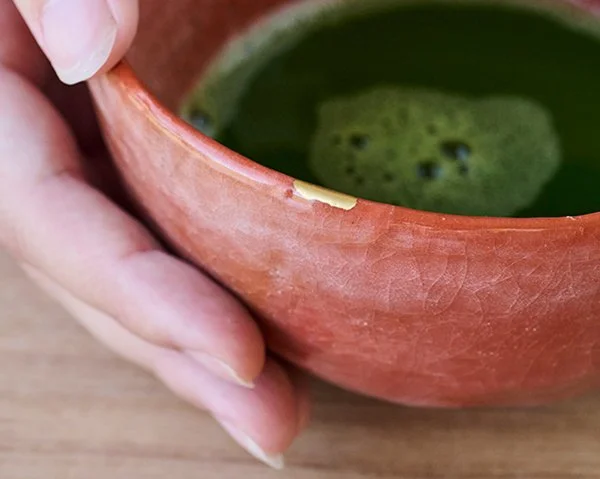
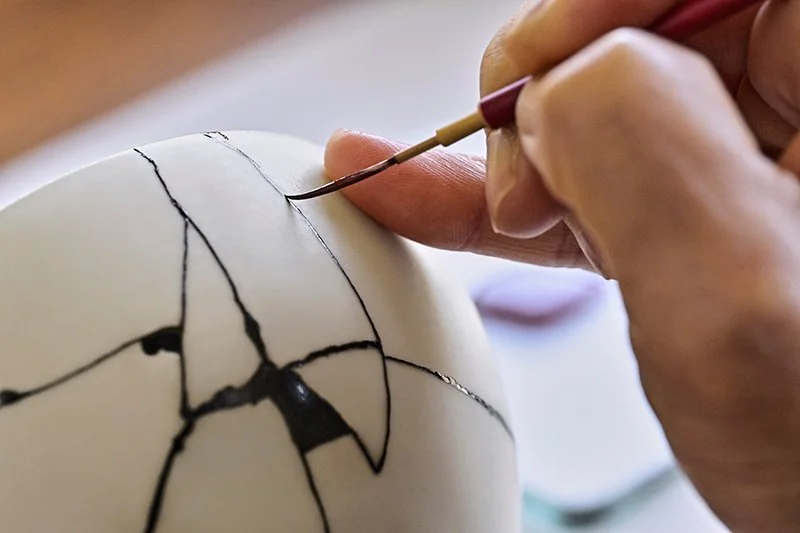
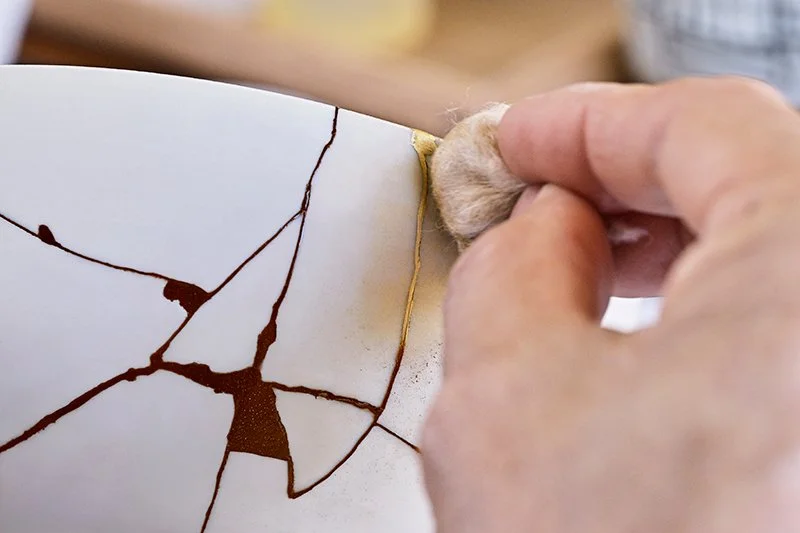
Kintsugi is the traditional Japanese art of repairing broken ceramics. Rather than hiding the damage, Kintsugi elevates the broken vessel, using gold or silver powder to highlight the fractures. This process transforms a broken object into a unique work of art, a Japanese aesthetic rooted in the wabi-cha tea ceremony—the beauty found in imperfection and the passage of time.
In a culture where vessels were cherished and repaired, Kintsugi allowed families to pass their favorite pieces down to the next generation, each scar telling a story of the object's history.
The History of the Craft
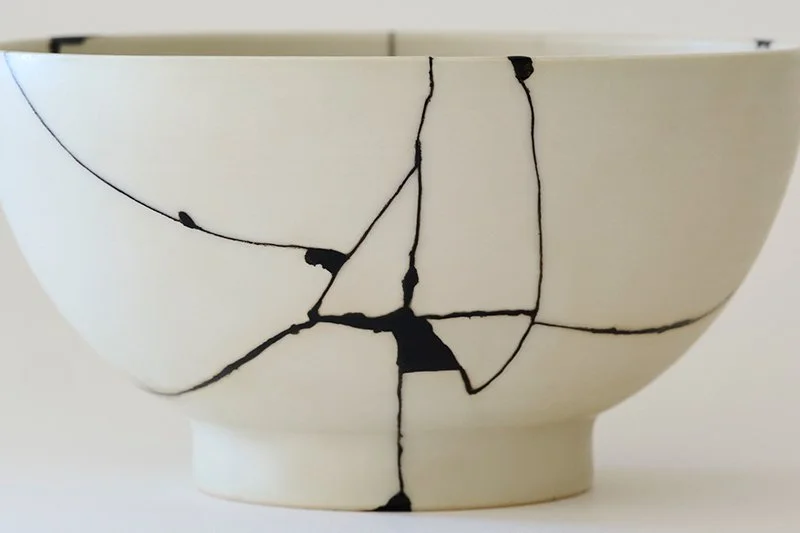
The roots of Kintsugi stretch back to the Jomon period (14,000 BC–300 BC), where the technique of repairing items with Urushi (natural lacquer) first emerged. The refined art of Kintsugi as we know it today flourished during the Muromachi period (1336–1573), driven by the popularity of the tea ceremony. Originally, this specialized work was performed by lacquer artisans who served as guardians of these tea vessels.
Traditional Kintsugi & Modern Kintsugi
-
Traditional Kintsugi
Uses natural urushi lacquer
Finished with real gold, silver, or brass powder
Food-safe after complete curing
Long repair process (usually 2–3 months)
Possible skin irritation/allergic reaction from raw urushi
-
Modern Kintsugi
Often uses epoxy resin or synthetic adhesives
Not always food-safe
Faster repair process (1-10days)
Lower risk of urushi rash, but chemical sensitivities can occur
The Magic of Urushi Lacquer
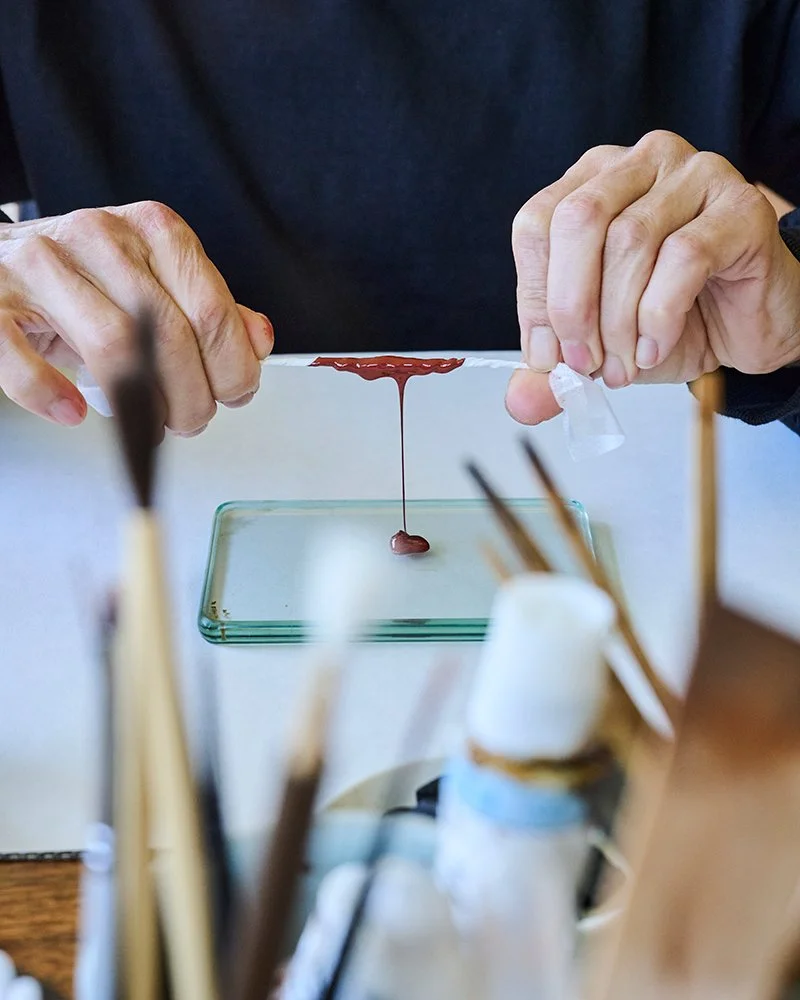
Urushi is a 100% natural material harvested from the resin of the lacquer tree. It is prized for its incredible strength, moisture resistance, and antiseptic properties.
Harvesting:
Only about 200ml can be harvested from a single tree. While cultivated in several Asian countries, Japanese lacquer is considered the highest quality.
Curing:
A Slow Transformation: Urushi does not "dry" like paint; it cures. It requires a specific environment to polymerize: a temperature of 20–25°C (68–77°F) and 70–80% humidity.
The Muro (Curing Box):
A specialized wooden curing box. The natural wood breathes, maintaining the perfect humid environment for the lacquer to harden into a durable, lustrous finish.
Important Safety Note:
While fully hardened Urushi is perfectly safe and hypoallergenic, liquid Urushi contains urushiol, which may cause skin irritation in some individuals. If the lacquer comes into contact with your skin, simply wipe it off with vegetable oil (since lacquer does not harden in oil) and wash the area thoroughly with soap and water.
Assessing Your Repair:
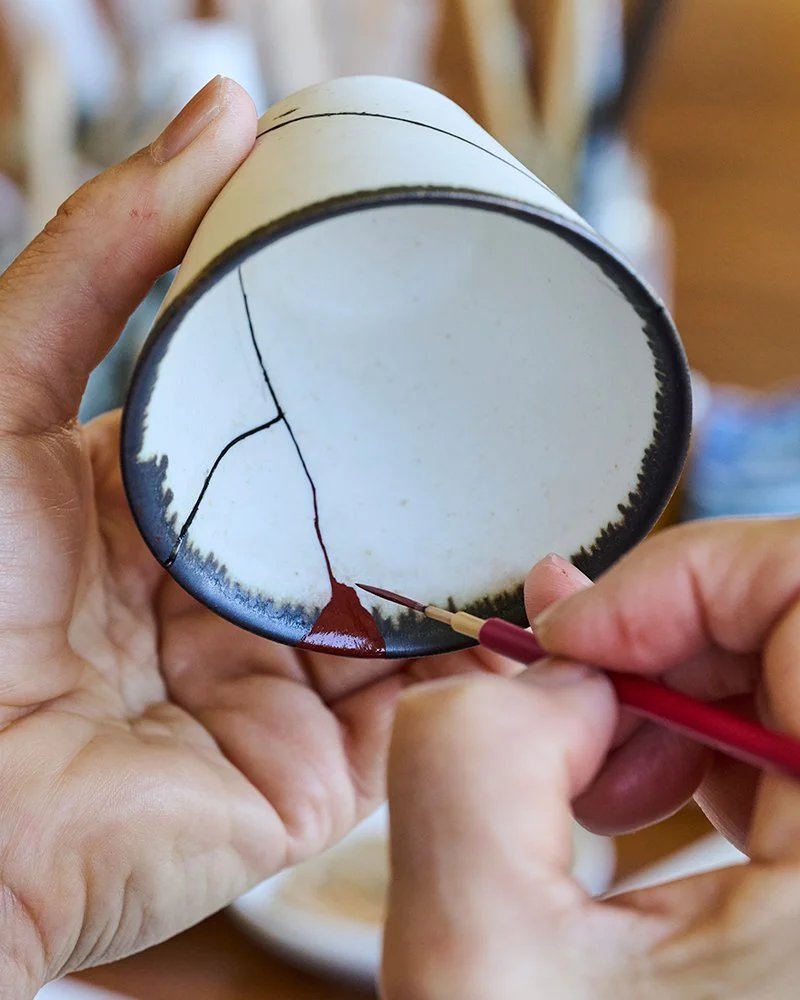
Every break is unique. We classify damage into four main categories to determine the best repair strategy:
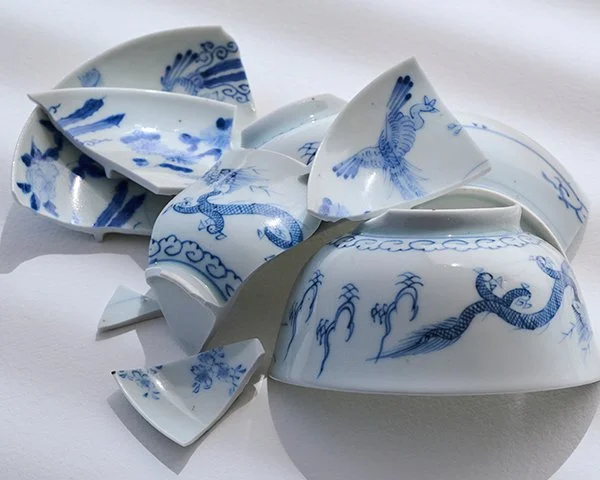
Ware (Break): The vessel has separated into two or more distinct pieces.
Kake (Chip): A small section of the vessel is missing.
Hibi/Nyuu (Crack): A hairline fracture that may leak or compromise the vessel’s integrity.
Hotsure (Fraying): Surface wear or minor chipping along the rim or base.
-
![Several pieces of a broken white ceramic bowl decorated with intricate blue dragon and phoenix patterns, arranged on a white background.]()
Repair.
Your broken vessels, restored with gold and tradition.
-
![A hand holds a textured red-orange tea bowl filled with frothy green matcha, showcasing a delicate gold Kintsugi repair along the rim.]()
About Kintsugi.
The roots of Kintsugi stretch back to the Jomon period (14,000 BC–300 BC), where the technique of repairing items with Urushi (natural lacquer) first emerged…
-
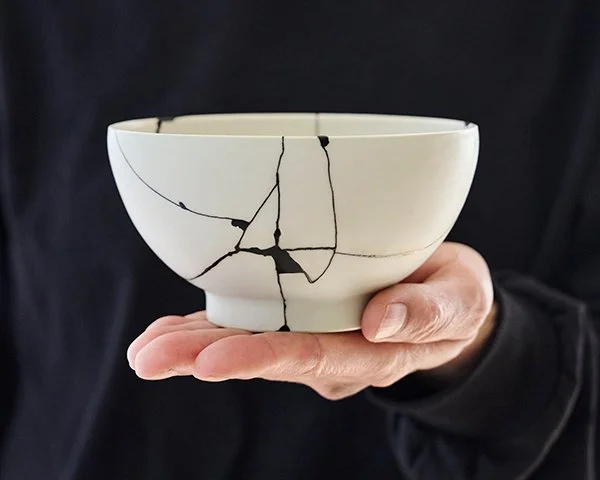
![A hand holds a white ceramic bowl undergoing Kintsugi repair, with cracks painted in black Urushi as an intermediate stage.]()
The Keshiki.
Restore the Vessel, Reset the Mind. Join us at Studio Keshiki to discover the joy of renewal.